
Adolescence is a period of intense physical, cognitive and social change, during which the body, the way young people interact and their learning styles evolve at a rapid pace. Adolescent students no longer have the same needs as primary school children, but they are not yet adults either: they occupy an in-between stage that requires careful attention to how they learn, how they interact with one another and how they use the classroom space.
Designing secondary school classrooms requires first understanding the nature of these stages, and then translating those needs into suitable spaces capable of supporting both their physical development and their way of working.
Why furniture should be adapted to a teenager’s physical growth
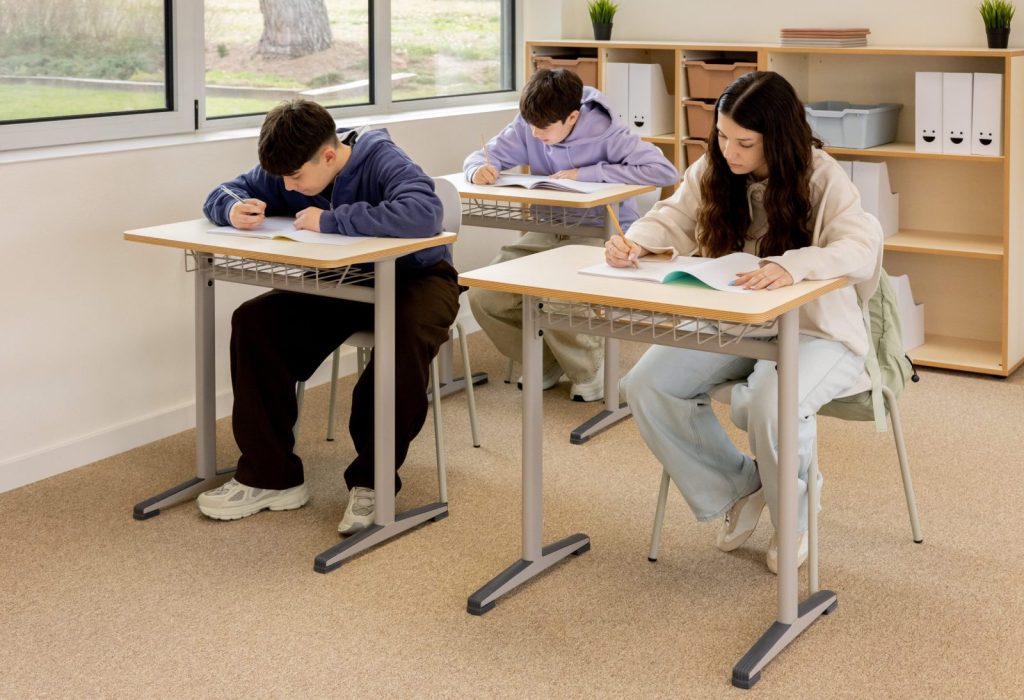
Between the ages of 12 and 18, adolescents experience their final major growth spurts. A single year group may include pupils with height differences of more than 20 centimetres, and furniture designed for younger children is no longer suitable. For this reason, at this stage, school furniture should meet adult ergonomic standards:
- Chairs and desks with adjustable heights or available in various sizes within the same classroom.
- Backrests and seats designed to support prolonged sitting, as school days are longer and more demanding.
- Durable materials, capable of withstanding the more intensive use typical of this age group.
Autonomy and teamwork: the role of modular furniture
In secondary schools, pupils are increasingly combining independent work with teamwork, a trend reflected in current teaching methods through a greater emphasis on group projects, debates, oral presentations and project-based learning, which move away from the traditional lecture-style format.
This is where modular furniture becomes a key ally:
- Tables that can be easily grouped together or separated to switch from individual work to group work.
- Lightweight, stackable chairs that allow the classroom to be reconfigured in a matter of minutes.
- Movable elements (whiteboards, panels, tables, chairs) that facilitate different dynamics without relying on a single fixed layout.
This type of furniture not only meets a pedagogical need: it also gives teenagers a more active role in organising their own learning space, something that ties in directly with their need for autonomy at this stage.
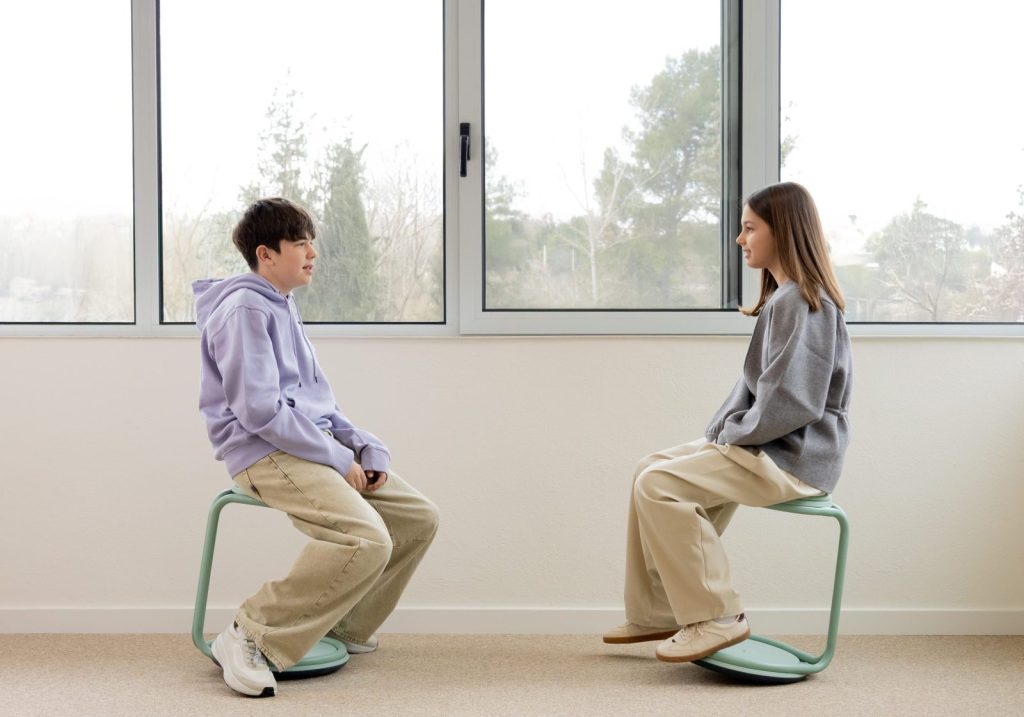
Multipurpose classrooms for a stage of education with more subjects and specialisms
Unlike in primary school, in secondary school pupils move between classrooms or different set-ups depending on the subject: laboratories, language classrooms, workshops, seminars, etc. This means that many schools opt for multi-purpose classrooms, capable of adapting to very different uses throughout the day.
For a multi-purpose classroom to work effectively, the following should be taken into account:
- Furniture that is easy to move and store when not in use.
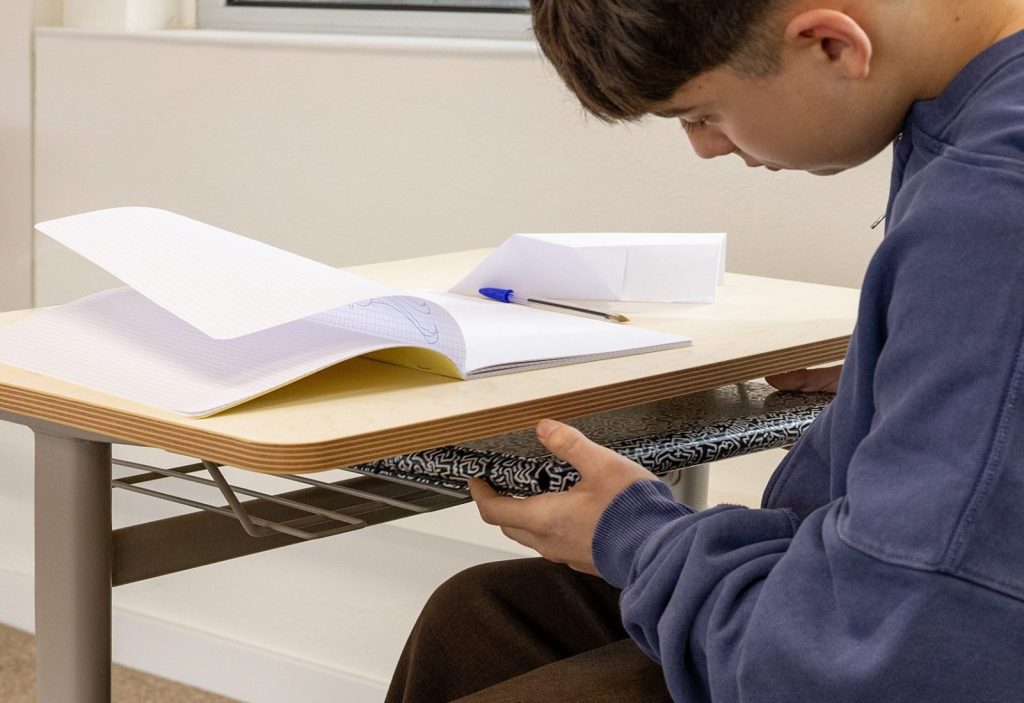
- Well-designed storage spaces for materials specific to each subject.
- Flexible layouts suitable for a lecture, a group discussion or small-group work.
The importance of considering students’ needs
Designing a secondary school classroom is not simply a matter of scaling up primary school furniture to a larger size. It involves understanding that this is a stage characterised by the pursuit of independence, collaborative work and significant physical diversity amongst pupils. When school furniture supports these characteristics – with adult-oriented ergonomics, modularity and versatility – the classroom ceases to be a mere space with desks and becomes a space that truly fosters learning at this stage.
At Mirplay School, we design furniture specifically tailored to the needs of secondary education.

