
The transformation of educational spaces is a reality: active methodologies, flexible classrooms, collaborative projects and technology have changed the way we teach and learn. That is why choosing between mobile or fixed school chairs is no longer an aesthetic decision, but a strategic choice that directly influences the comfort, functionality and performance of the classroom.
In this article, we analyse which type of school chair works best in each educational space, the advantages of each option, and which models are specifically designed for each need.
Key differences between mobile and fixed school chairs
Before discussing the types of classrooms, it is important to understand the differences between the two types:
Features
Flexibility of space
Suitable for active methodologies
Stability
Ease of cleaning
Designed for young children
Classroom reconfiguration
Maintenance cost
Mobile chairs
Very high
Yes
Medium
High
Not recommended
Immediate
Medium
Fixed chairs
Medium
Moderate
Very high
Very high
Yes
Limited
Low
The choice depends on the educational use of the classroom, the educational level, and how often the space is transformed.
When to choose mobile school chairs
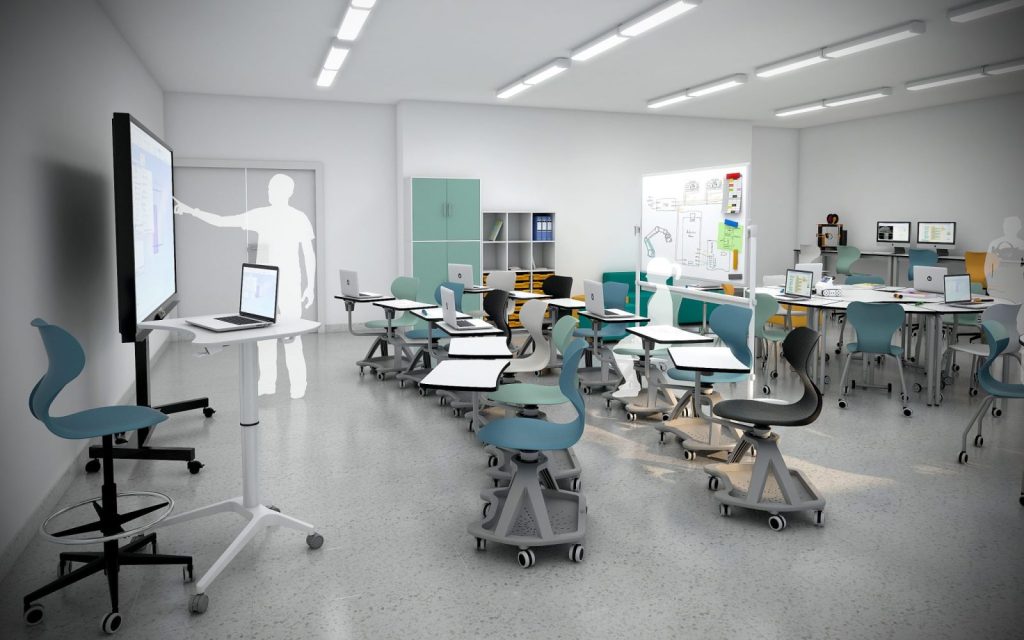
Mobile chairs are ideal for schools that work with active learning, collaborative dynamics and spaces that change several times a day. They make movement and interaction easier and allow the classroom layout to be adapted to different activities effortlessly.
Advantages of mobile chairs
- Rearrange the classroom in seconds
- Support cooperative work
- Greater student autonomy
- Suitable for projects, workshops and laboratories
- Combine ergonomics and dynamism
Below are the educational spaces where this type of chair works best and the most suitable models.
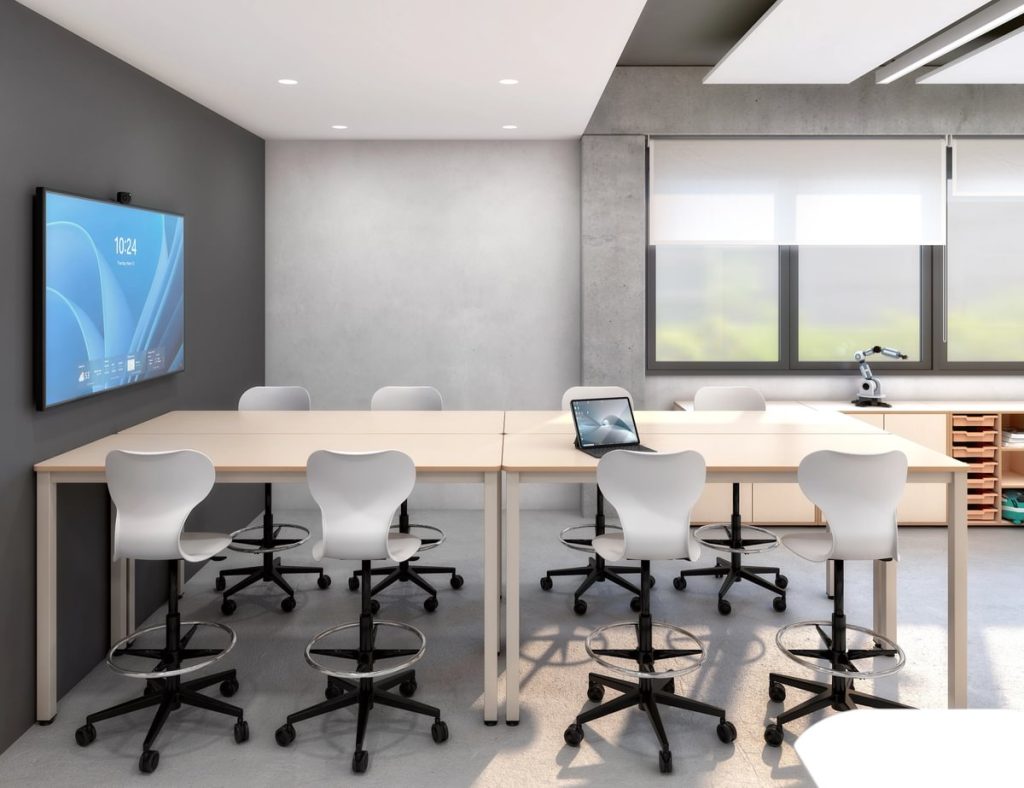
1. STEAM / ATECA classrooms
These are spaces for design, experimentation, robotics or project work. They require a high degree of mobility, access to materials and constant changes of activity.
Recommended models: Mia Castors or Mia Store
2. Laboratories
Laboratories require agility when moving between equipment, high tables or experiment areas. Height adjustment and lightweight seats are key.
Recommended models: Mia Stool or Mia Lift
3. Secondary school and sixth form
At these stages there is a greater variety of methods: projects, research, individual and group work. Mobility makes the transition between activities easier.
Recommended model: Mia Table
When to choose fixed school chairs
Fixed chairs offer stability, safety and durability, making them the ideal choice for young children and for spaces where order and sturdiness are the priority.
Advantages of fixed chairs
- High stability
- Safety for young pupils
- Withstand intensive use
- Minimal maintenance
- Help keep the classroom tidy
Below are the educational spaces where this type of chair works best and the most suitable models.
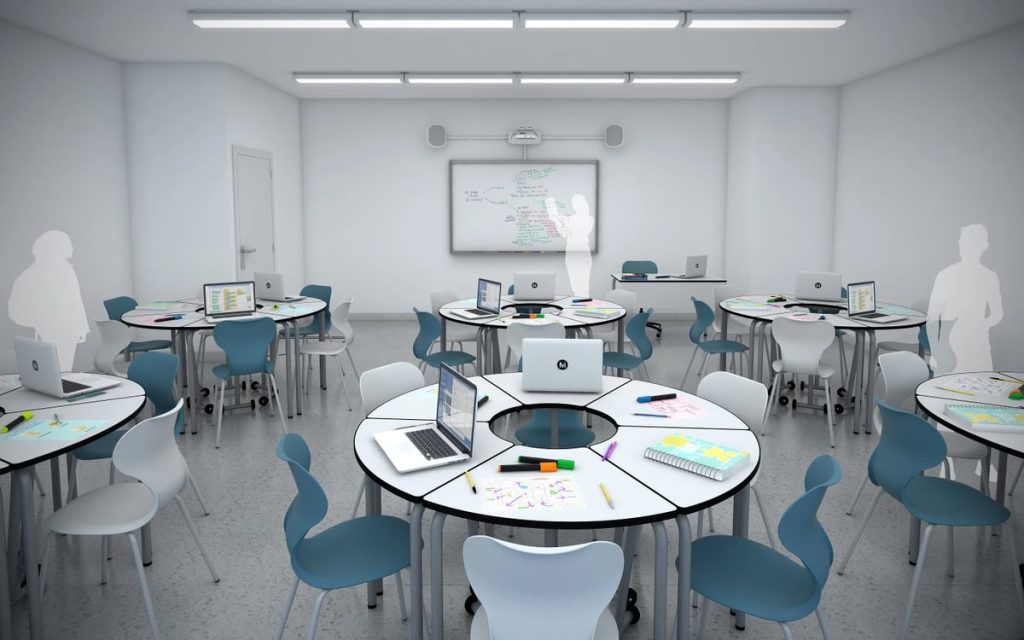
1. Conventional classrooms
In primary and lower secondary school, where lectures are combined with guided activities, fixed chairs offer a balance between ergonomics, durability and order.
Recommended models: Mia Basic or Mia Cantilever
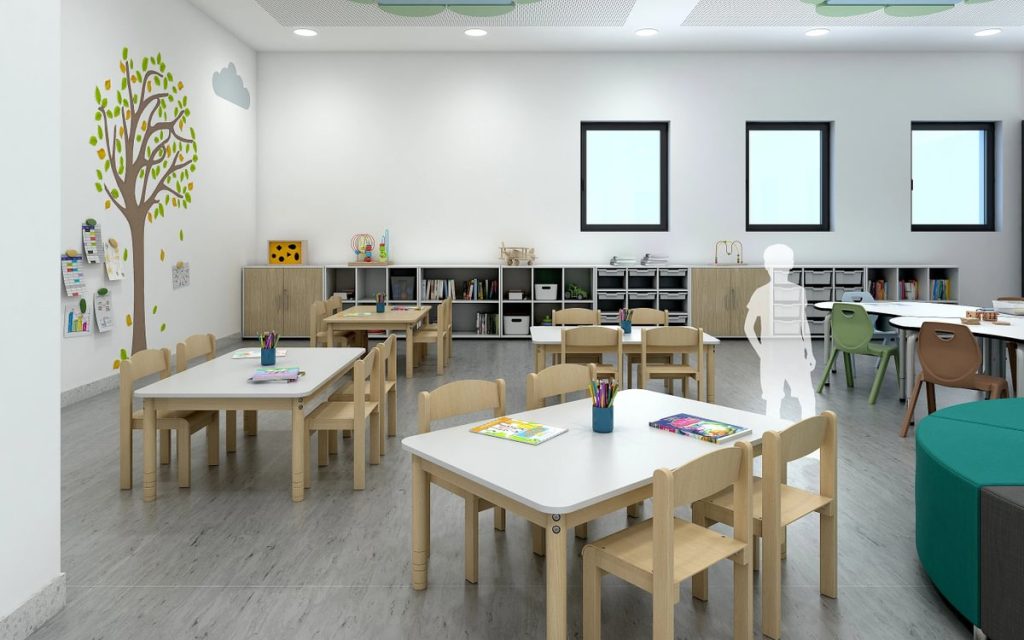
2. Early years classrooms
In early years and the first years of primary school, stability is essential. Fixed chairs prevent unintended movement and help create a safe and orderly environment.
Recommended models: Ina, Mia Basic or Romer.
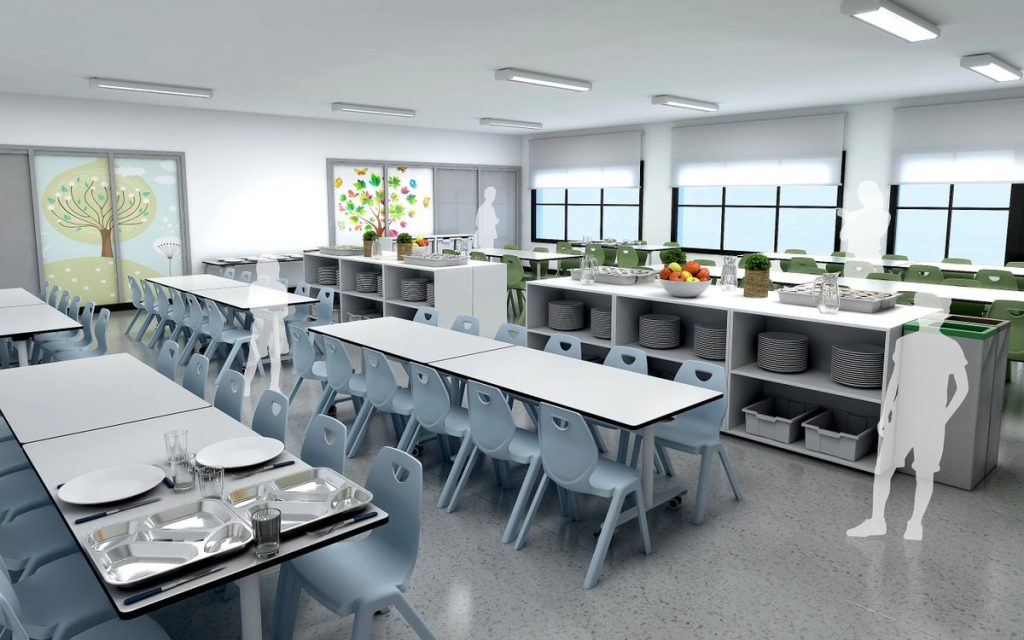
3. School canteens
Canteens need sturdy, stable and easy-to-clean furniture. Fixed chairs guarantee safety and durability in high-traffic spaces.
Recommended model: Ina
The choice between mobile and fixed chairs depends on the type of classroom, the teaching method and the needs of the students. Mirplay School offers a complete range of models designed for every educational environment, to create classrooms that are more comfortable, functional and adapted to new teaching challenges.
Do you want to transform your school?
Contact our team for personalised advice.

