
A well-organised school environment favours students’ concentration and learning, and also improves functionality and safety in the classroom. Tidiness is not just a question of aesthetics, but a tool to optimise time, avoid loss of material and encourage student autonomy.
In spaces such as classrooms, libraries, laboratories or corridors, the intelligent use of space is key. In this context, school cabinets become an indispensable solution for keeping all objects and materials organised and accessible.
Below, we show you the key factors to take into account when choosing a school cabinets, the types available and the advantages they offer depending on the educational stage.
Key factors when choosing a school cabinet
When selecting the ideal school cabinet, it is important to take into account several aspects that have an impact on both ease of use and functionality:
- Height: They must be adapted to the age of the pupils in order to encourage autonomy.
- Type of locking: They can be with doors to maintain visual order or without doors for quicker access to objects.
- Interior configuration: There are options with shelves, trays, adjustable compartments or combinations of all of them.
- Accessibility and ergonomics: The design must allow easy and comfortable access for students and teachers.
- Safety: Rounded corners, stable structures and wall anchoring are essential to ensure safe use.
- Materials and durability: It is recommended to choose materials that are resistant, easy to clean and have a good service life.
Practical tips for choosing the ideal cabinet
Before deciding which model of school cupboard to include, we recommend asking yourself these key questions to make the right choice for your needs. Evaluating these aspects will allow you to make a choice that is functional, durable and consistent with everyday use.
Advantages of adapting school cabinets to each stage of education
Storage needs vary according to the educational stage of the students, so not all cupboards have the same utility:
• Early Childhood Education
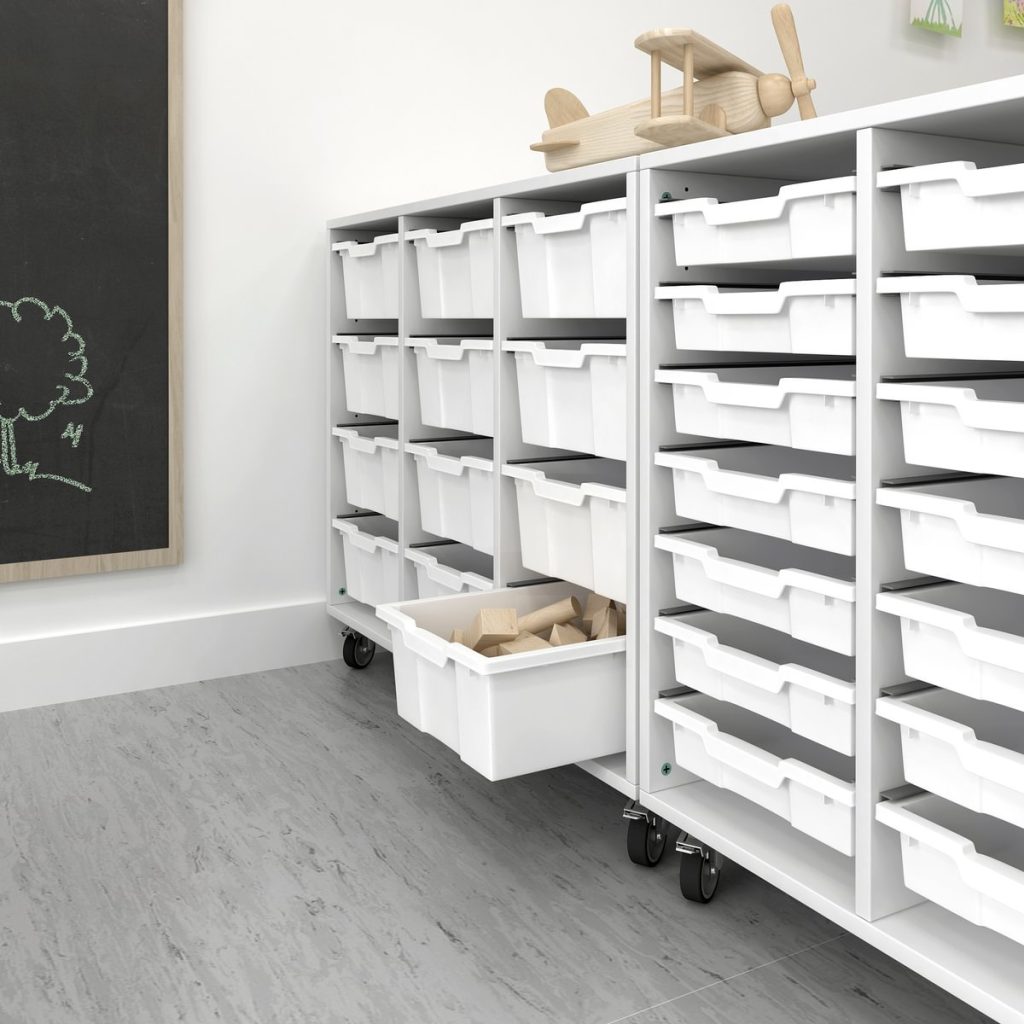
Cabinets and bookcases should be low, 80 cm or 120 cm high, to allow children to access materials by themselves, favouring their autonomy and organisation by corners.
• Primary Education
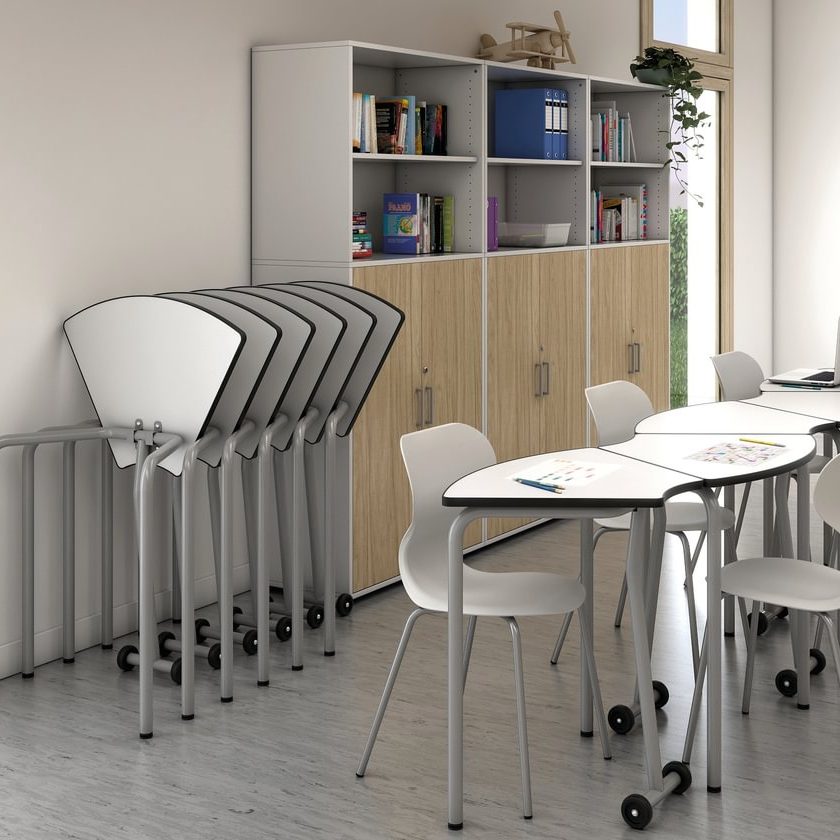
Furniture of different heights, up to 160 cm, can be combined with trays or shelves classified by areas or subjects, allowing for a logical and structured distribution of content.
• Secondary education and common spaces
In higher education, as well as in libraries or faculty spaces, tall cabinets of up to 200 cm are common, as they offer more storage capacity and a more functional approach.
Types and sizes of cabinets available
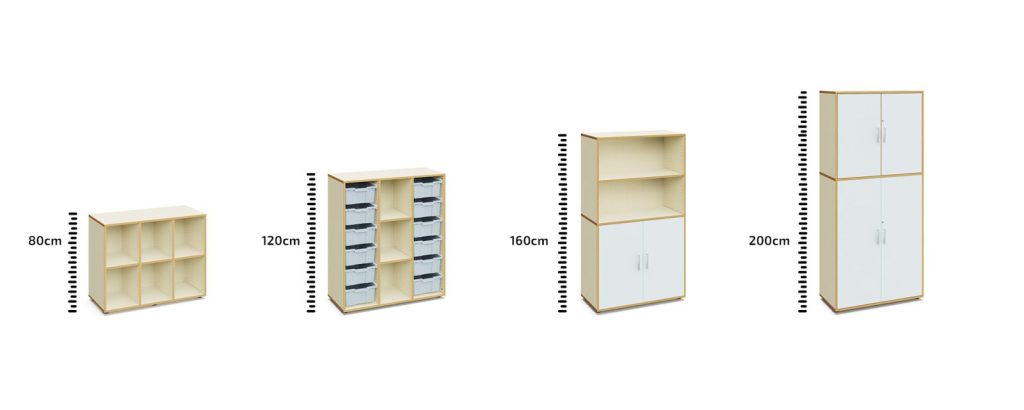
Below, we show you the different heights of school lockers that we offer at Mirplay School and for which applications they are ideal. In addition, their modular design allows for multiple combinations depending on the space and the educational objective.
- 80 cm: Perfect for infant classrooms and accessible use.
- 120 cm: Ideal for primary school and shared spaces.
- 160 cm: An intermediate solution with good storage capacity.
- 200 cm: Designed for general storage areas or exclusive use by teachers.
Choosing the right school cupboard is a strategic decision that can improve classroom dynamics, promote order and facilitate the work of both teachers and students.
At Mirplay School we offer a wide range of functional, resistant school cupboards adapted to each educational stage. Our furniture combines design, durability and versatility, with solutions designed for today’s educational environment.
Check out our range of school cupboards and find the option that best suits your needs.

