
School furniture has evolved significantly in recent decades. We have moved from uniform, cold and functional classrooms to more dynamic, flexible and wellbeing-focused educational spaces.
Today, decisions about the design of the school environment, from the layout of the classroom to the colours of the chairs or tables, are considered pedagogical tools that directly influence the learning experience. More and more schools are opting for environments that are more humanised, attractive and adapted to the needs of students and teachers.
Within this transformation, colour plays a fundamental role. In the following, we will explore how the colour of school furniture can influence the cognitive and emotional development of students.
The psychology of colour in the school classroom
Numerous studies have shown that colours have a direct impact on people’s mood, concentration and behaviour. In the case of the school environment, these effects are multiplied, as the classroom becomes the space where students spend a large part of their day.
A study by the University of Salford concluded that the physical environment of the classroom, including the colours of the furniture and walls, can influence academic performance by up to 25%.
Considering their impact on mood and performance, it is crucial to understand how colours affect the school environment. Their effects in the classroom are detailed below:
- Warm colours such as yellow can encourage creativity, optimism and participation.
- Cool colours such as blue or green promote calm, concentration and a sense of security.
- Neutral tones such as white, warm grey or wood finishes help to balance the environment and avoid overstimulation.
How colours relate to levels of education
The right colour is not the same for a nursery classroom as it is for a vocational training space. Adapting the colour palette to the educational stage improves the learning environment and reinforces the dynamics of each age group.
Early Childhood Education
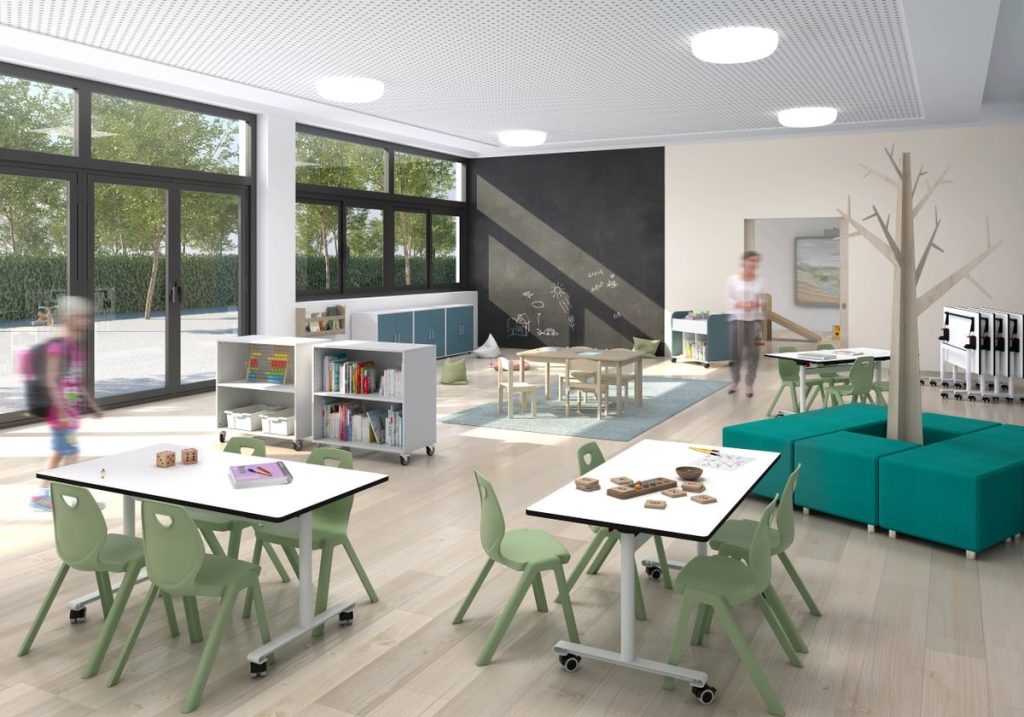
Bright colours such as yellow or green stimulate imagination, play and energy.
Primary
Combine bright tones with soft colours to balance energy and concentration. Green, sky blue and off-white are good choices.
High School
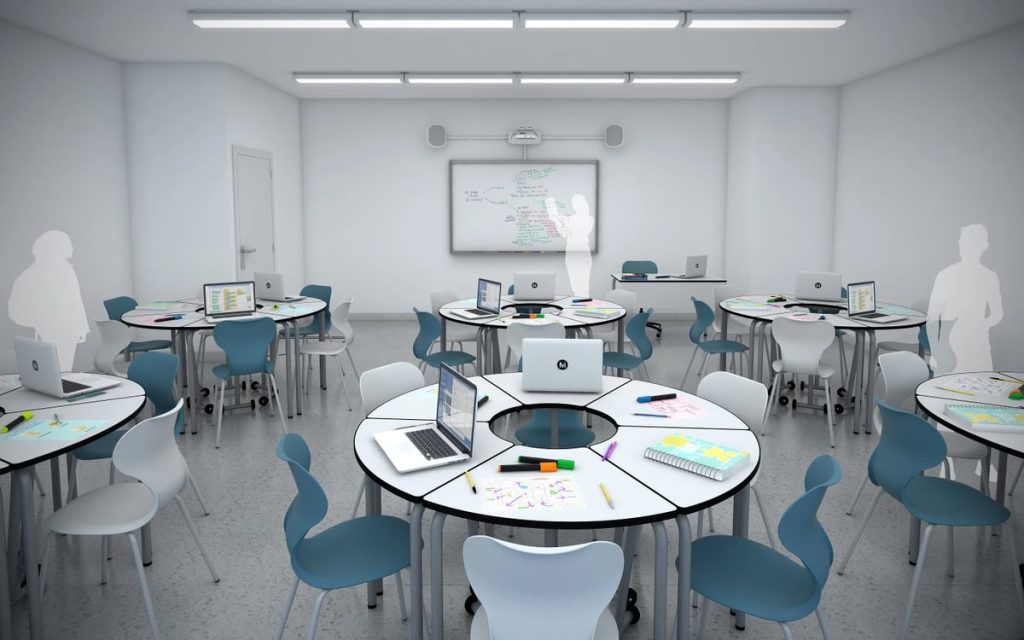
Neutral or cool colours such as warm grey, dark blue or beige are recommended to encourage concentration and avoid distractions.
Vocational Training or Technical Classrooms
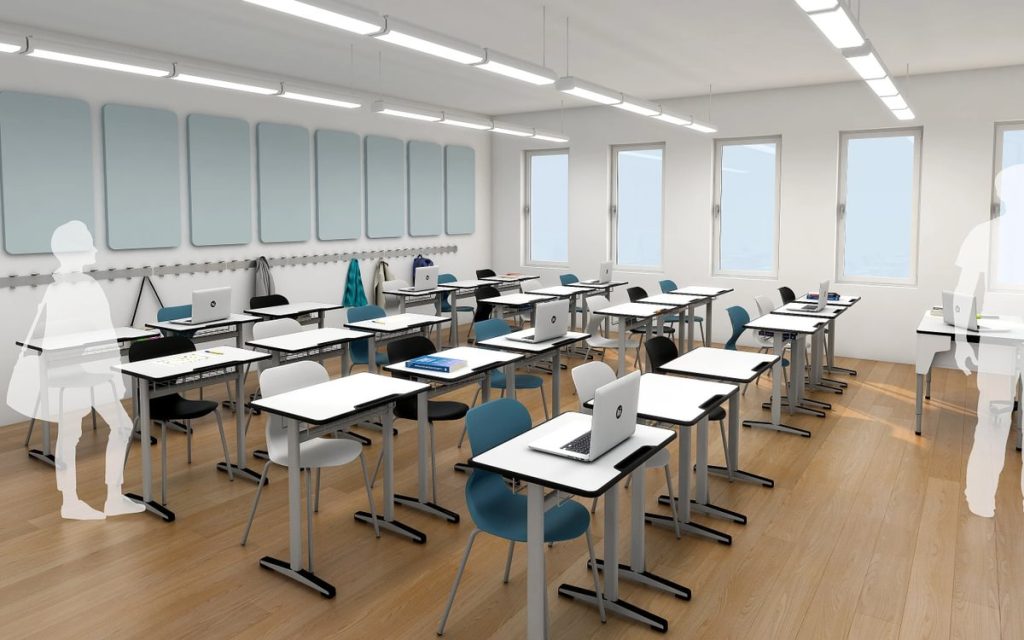
Elegant and sober combinations that convey professionalism, such as warm grey with accents of olive green or white, are valued.
How the right choice of colour benefits schools
Integrating a colour strategy into classroom design goes far beyond aesthetics. The benefits are the following:
- Increased student motivation: a pleasant and stimulating environment improves willingness to learn.
- More welcoming environments: colour helps to create spaces where students feel comfortable and safe.
- Reinforcement of the school’s identity: a well thought-out palette can reflect the values of the educational project and differentiate the school from others.
- Better perception by parents and visitors: a well-thought-out design conveys professionalism, innovation and commitment to the well-being of students.
Application of the right colours in school furniture
Our design team understands that every educational space requires a tailored school furniture solution. That is why we offer versatile, functional options and a range of colours designed to meet the real needs of educational centres. The following are examples of chromatic application in school furniture:
- Mia school chair: designed with a fixed structure in Warm Gray combined with shells in shades of green, yellow, white or light blue, ideal for environments that seek freshness and dynamism without overloading the environment.
- Pua, Hexa, Octa and Wave school tables: structure in Warm Gray and tops in Maple White melamine, an elegant and timeless option that fits both primary classrooms and vocational training spaces.
- School cupboards and storage: Maple White melamine tops match the colours of the furniture to maintain aesthetic coherence and create a harmonious environment.
The strategic use of colour in all elements allows the construction of coherent, functional and emotionally positive spaces.
The power of colour in school furniture
Colour is much more than an aesthetic choice: it is an educational tool. Applied judiciously in school furniture, it can become an ally to improve learning, well-being and the overall experience of students and teachers.
At Mirplay School we design and manufacture school furniture with purpose. If you are a distributor, teacher or head of an educational centre, we invite you to discover our product lines designed to transform learning environments.

