
Education has undergone a significant transformation in recent decades. Today, technological tools and innovative approaches are redefining what we mean by an educational classroom. The implementation of the concept of the STEAM classroom in schools not only transforms the physical environment, but also profoundly changes the educational process. This approach seeks to adapt the classroom to the needs of the present, offering benefits that impact both students and teachers.
In this article we will explore how the STEAM classroom can improve academic performance, foster creativity, increase student motivation and develop key social skills.
1. Improved academic performance
One of the main benefits of implementing the STEAM classroom is the improvement in students’ academic performance. This type of classroom is characterised by a flexible design that facilitates the use of interactive and personalised technologies.
Through tools such as digital whiteboards, electronic devices and online learning resources, students can learn more deeply and at their own pace. This allows for a personalisation of learning, adapting to the individual needs of each student, which contributes to a better understanding of the content and, consequently, to superior academic performance.
2. Encouraging creativity and critical thinking
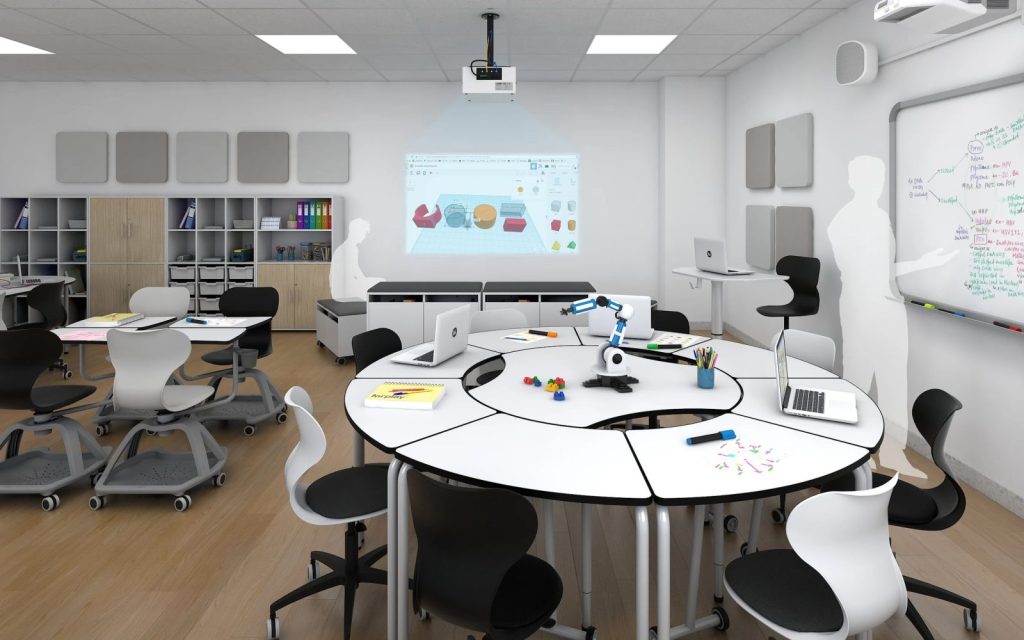
STEAM classrooms not only focus on the transmission of information, but also promote essential skills for students’ development in an increasingly complex and technological world. Collaborative spaces, such as round tables, group work areas and digital design tools, allow students to explore their creativity and develop critical thinking.
Technology also plays a crucial role in providing students with access to interactive platforms and multimedia resources that stimulate their curiosity and analytical skills. In this way, students not only learn to solve problems, but also develop the ability to think independently and originally.
3. Increased motivation and commitment
The traditional classroom, with its unidirectional approach to teaching, often fails to engage students’ interest. In contrast, STEAM classroom, with its interactive and dynamic approach, motivates students to actively participate in their learning.
Electronic devices, the use of augmented reality, simulators and the possibility to collaborate online allow students to experience and learn in a more engaging and stimulating way. This increased interaction and gamification of educational content sparks curiosity and the desire to learn, which increases students’ engagement with their studies.
4. Development of social skills
STEAM classroom also excels at fostering teamwork, an essential component of developing social skills. Collaborative spaces, combined with the use of communication technologies, allow students to work together to solve problems, share ideas and learn from each other.
This approach fosters skills such as communication, leadership and cooperation, skills that are increasingly valued in professional and personal environments. In addition, by being exposed to diverse perspectives and ways of working, students learn to value diversity of opinions and develop empathy, a key skill in the globalised world.
The importance of school furniture in STEAM classroom
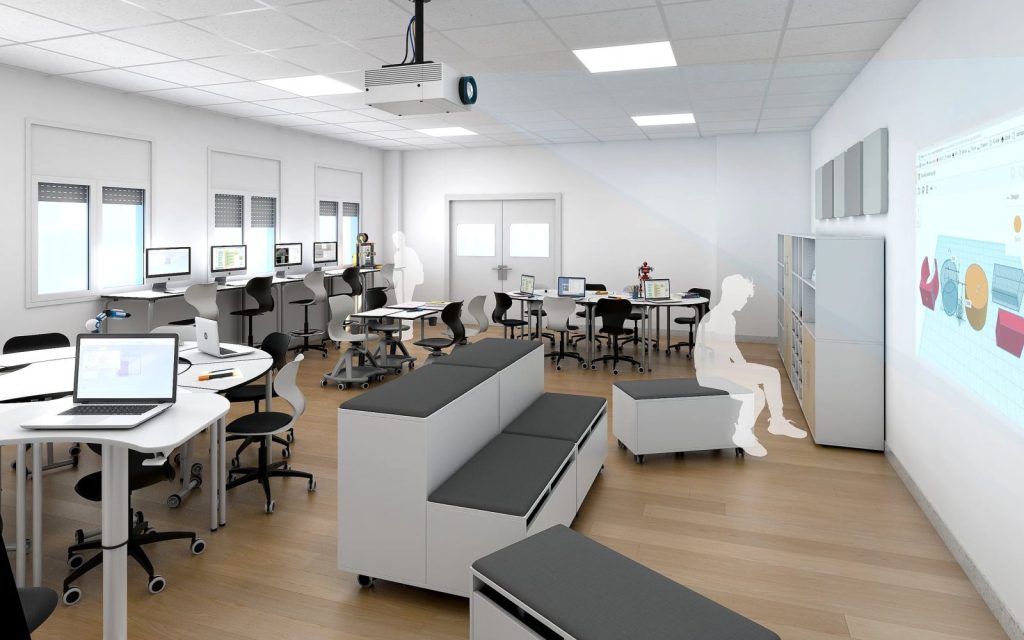
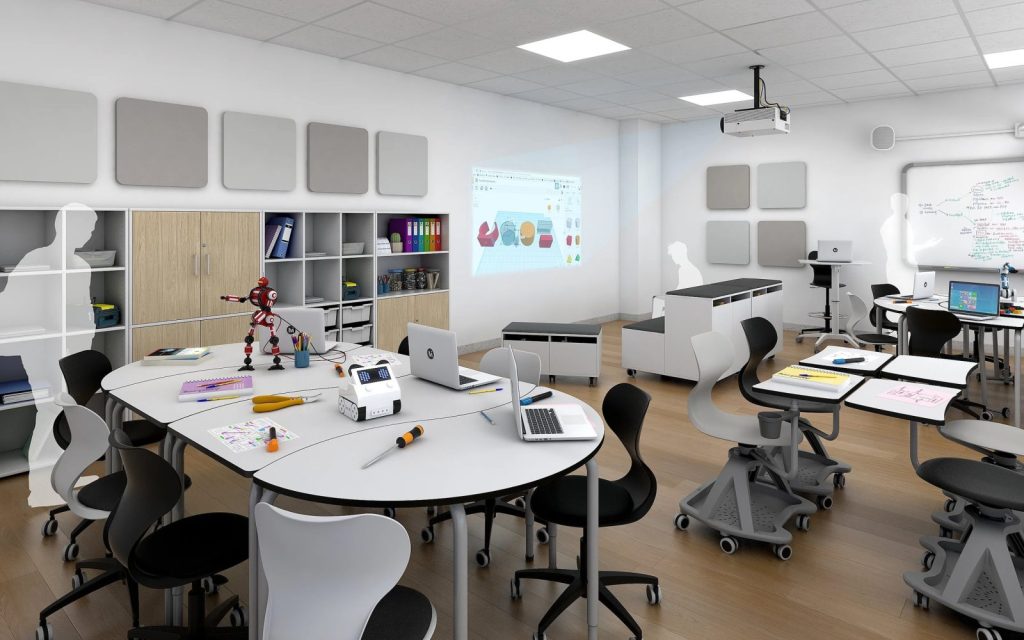
For an effective STEAM classroom, it is essential that school furniture also evolves. The design of spaces must be flexible and adaptable to the diverse needs of students and activities. The ideal school furniture for the STEAM classroom includes modular furniture that can be rearranged according to work dynamics, as well as ergonomic seating that promotes comfort during long hours of learning. This type of furniture not only facilitates mobility, but also supports collaborative and active learning.
Implementing STEAM classroom not only introduces new technologies, but also transforms the way we teach and learn. It fosters dynamic, personalised and collaborative learning, which benefits students and teachers. It goes beyond academic performance, developing key skills such as creativity, critical thinking, motivation and social competences. With these changes, schools are preparing students to face the challenges of the future, equipping them with the tools they need to succeed in an ever-changing world. Without a doubt, the STEAM classroom is an investment in everyone’s future.

