
Education is constantly evolving, and with it, so are the spaces where it is taught. Currently, the traditional approach based on lectures, rows of desks and students as passive listeners is being replaced by active and participatory methodologies.
In this new paradigm, collaborative classrooms stand out as a transformative tool that promotes meaningful learning and improves student engagement in the educational process.
What are collaborative classrooms?
A collaborative classroom is a pedagogical concept that seeks to break with the unidirectionality of knowledge and foster a culture of participation, cooperation, and joint learning.
In this type of environment, the role of the teacher changes radically because they cease to be the sole source of information and become a facilitator of learning, guiding students in their process of discovery, reflection, and creation. Students, for their part, take on a more active role, participating in the construction of knowledge, either in small groups or in whole-class dynamics.
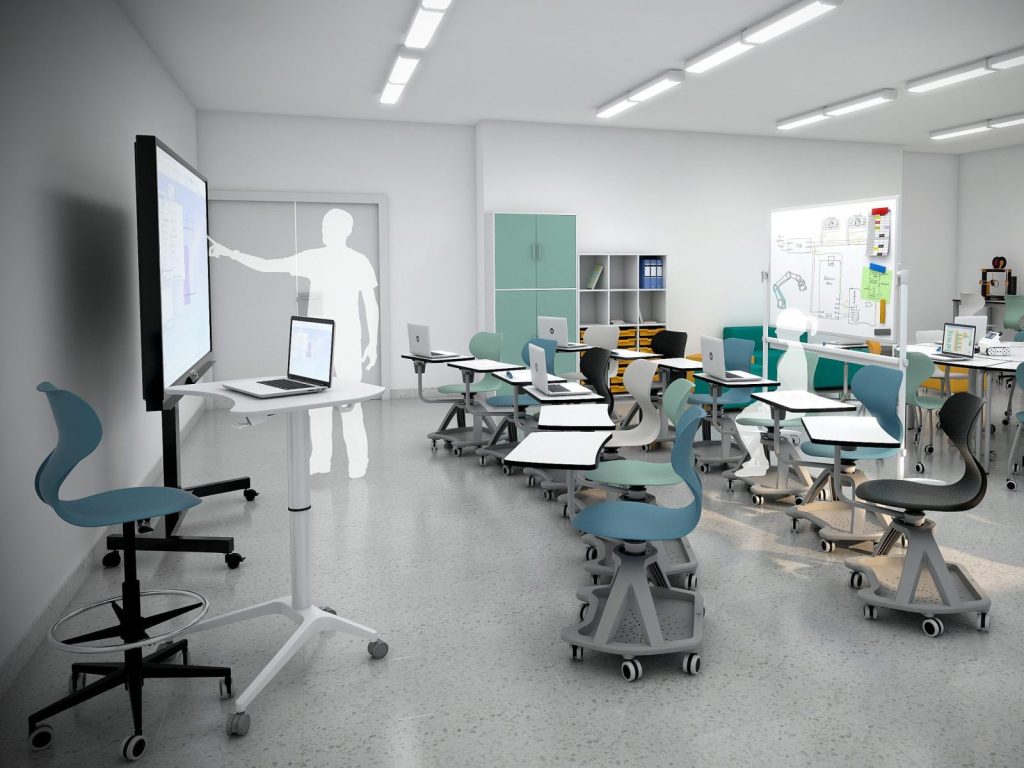
In addition, collaborative classrooms are designed to be flexible and easily adaptable to different teaching styles and active methodologies such as project-based learning, cooperative learning, challenge-based learning, design thinking, among other methodologies.
Benefits of collaborative classrooms in learning
The implementation of collaborative classrooms not only transforms the physical space, but also has a profound impact on students’ academic, emotional, and social development. Below, we take a closer look at some of its main benefits:
• Greater student participation and motivation
When students have a voice and are actively involved in class, their motivation levels increase significantly. Collaborative classrooms break the routine and encourage curiosity and enthusiasm for learning. This translates into higher attendance, fewer distractions, and a more positive classroom atmosphere.
Furthermore, by being able to choose how to organise themselves or present their ideas, students feel more empowered, which contributes to improving their self-esteem and commitment to learning.
• Development of cognitive and social skills
Today’s world demands skills that go beyond theoretical knowledge. Collaborative classrooms help students develop fundamental skills such as teamwork, effective communication, problem solving, and critical and creative thinking. These skills, which are essential in school, are also essential in the workplace and in social settings.
• Promoting inclusion and diversity
In a collaborative environment, all students have the opportunity to participate, share their ideas, and learn from each other. This promotes inclusion, as diversity in perspectives, learning styles, and work paces is valued. It fosters a more fair, equitable, and respectful learning community.
• Deeper and more lasting learning
Recent studies indicate that when students actively construct their knowledge through experience and collaboration, they not only understand the content better, but also retain it for longer. By linking what they have learned to practice and collective work, learning becomes more meaningful and contextualised.
The role of school furniture: mobile, modular and functional
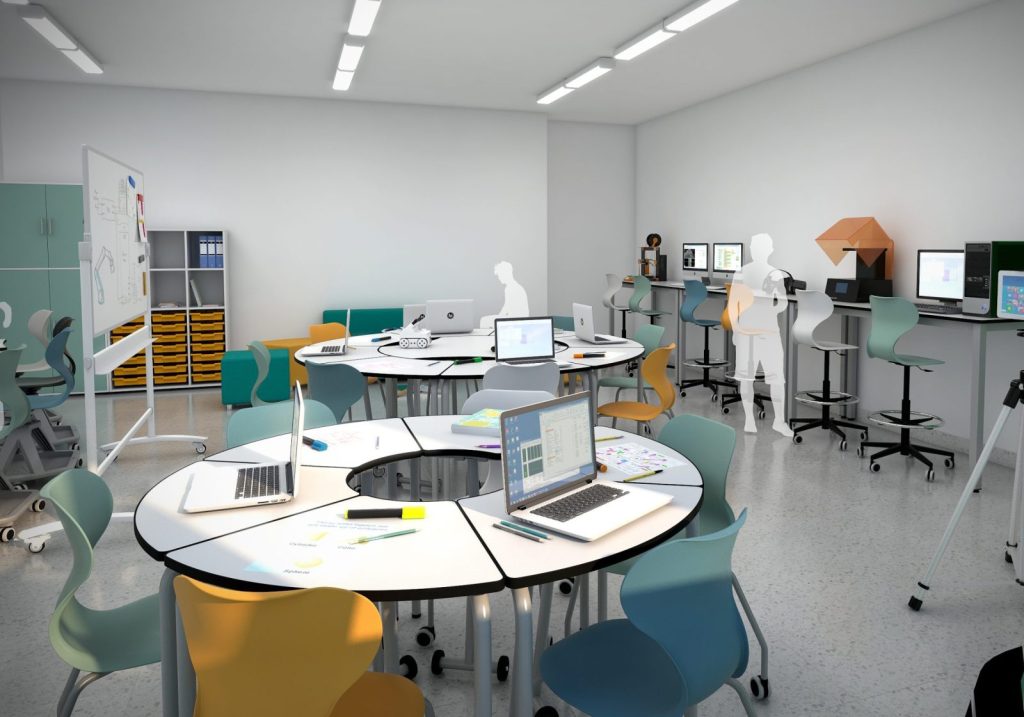
The design of the physical space is a key factor in creating collaborative classrooms, and in this context, school furniture plays a fundamental role. Traditional classrooms, with fixed desks and rows of chairs, limit mobility and hinder interaction. For this reason, furniture for collaborative classrooms should be:
• Mobile school furniture
Chairs with wheels, stools, and other easily movable items allow you to reorganise the classroom in a matter of minutes.
• Modular school furniture
Furniture that can be joined or separated according to the needs of the activity promotes pedagogical flexibility.
• Functional and ergonomic school furniture
Designed with students’ comfort and postural health in mind, which improves concentration and overall well-being.
A well-equipped classroom facilitates the transition between different types of activities: from group discussions to presentations or individual work. It also allows the environment to be adapted to different group sizes, levels of autonomy and learning styles.

