
With the incorporation of active learning methodologies, the school environment is changing to better adapt to current needs. School furniture plays a key role in this evolution, as it must be flexible and functional to support new learning methodologies.
This article explores how the ideal school furniture for the STEAM classroom must evolve to create collaborative and adaptive spaces, favouring practical and dynamic learning. From classroom layout to specific furniture features, we will look at how the design of spaces directly impacts educational processes.
What is the STEAM classroom?
The STEAM classroom is a project focused on students and their learning, creating a flexible space that combines advanced technologies and active teaching methodologies to personalise learning.
It aims to promote a dynamic interaction between students, content and teachers, encouraging participation, collaboration and creativity. Unlike traditional models, it favours an active and collaborative approach, integrating methodologies such as project-based learning and the flipped classroom, all within an environment adaptable to diverse activities.
STEAM classroom design and layout
The STEAM classroom is a space divided into six reconfigurable zones that promote active and collaborative learning. Each zone is designed for a specific type of activity, allowing students to interact, research, create and present in a flexible way.
1. Research
Observation and experimentation area that encourages critical thinking and analysis of environments. Equipped with furniture for laptops and flexible furniture suitable for autonomous research.
2. Explore
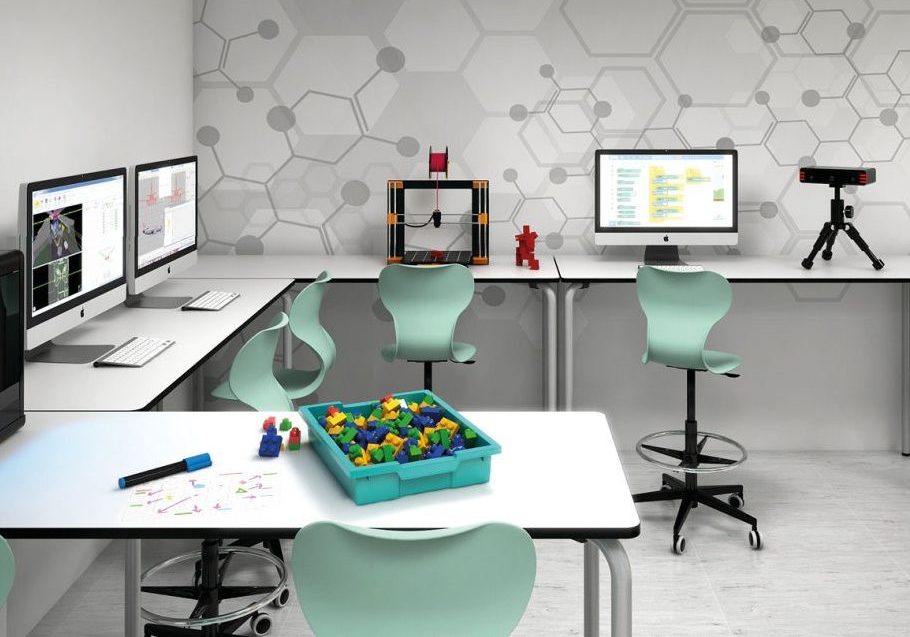
A space for experimentation and practical discovery. Equipped with resources such as robotics kits and immersive technology as well as the right furniture for active learning.
3. Interact
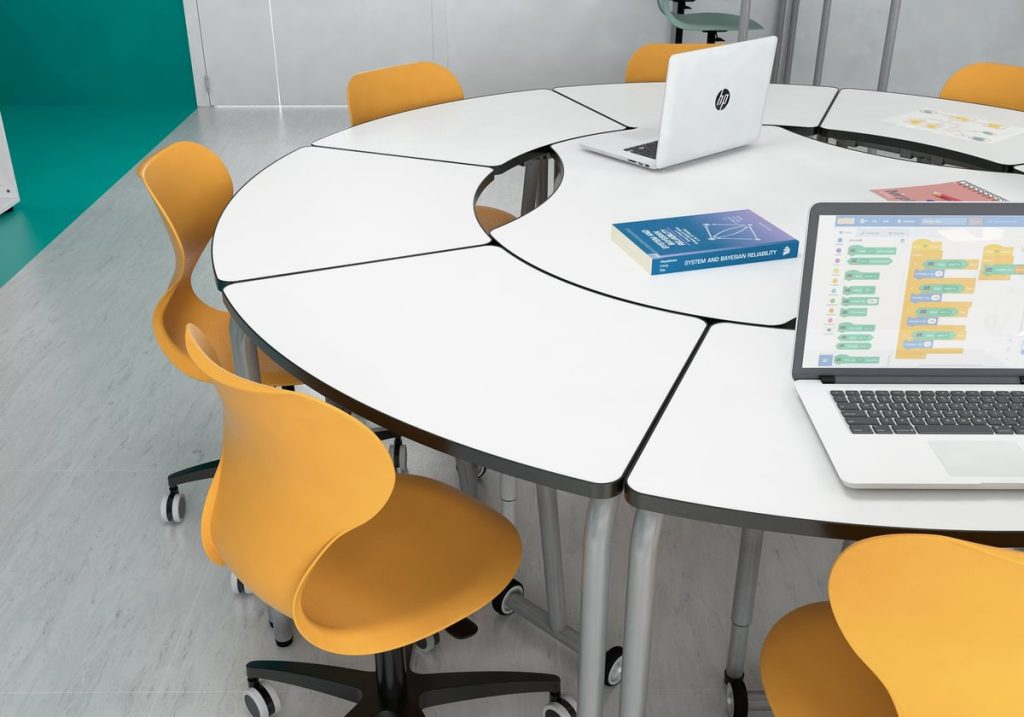
Area dedicated to teamwork and collaborative activities such as debates. Equipped with modular tables and movable chairs, it allows interaction between students for collaborative activities.
4. Develop
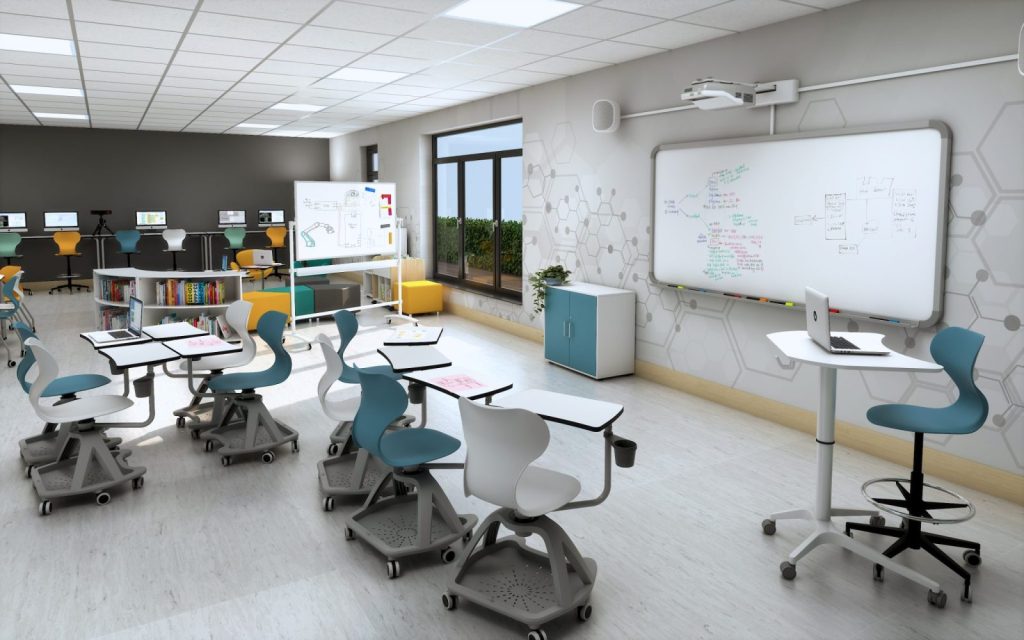
Space for individual or collective learning for project planning. With digital tools and whiteboards to structure the content.
5. Create
An area for observation and experimentation to materialise ideas. Laptops and design equipment to create prototypes and products.
6. Presents
Area for the presentation of works, equipped with screens and projectors, as well as modular stands for those attending the exhibition.
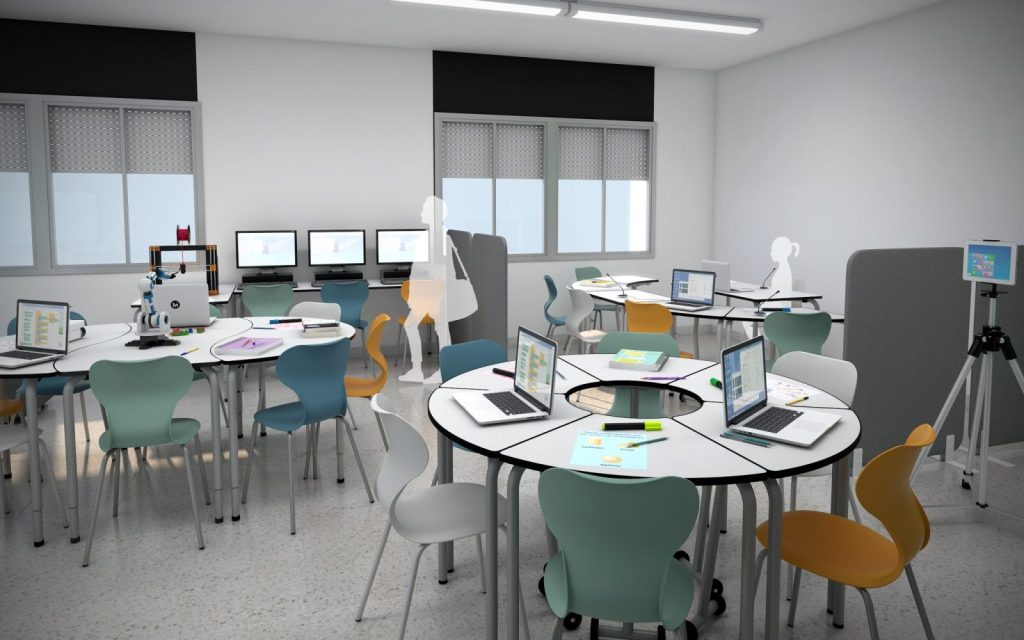
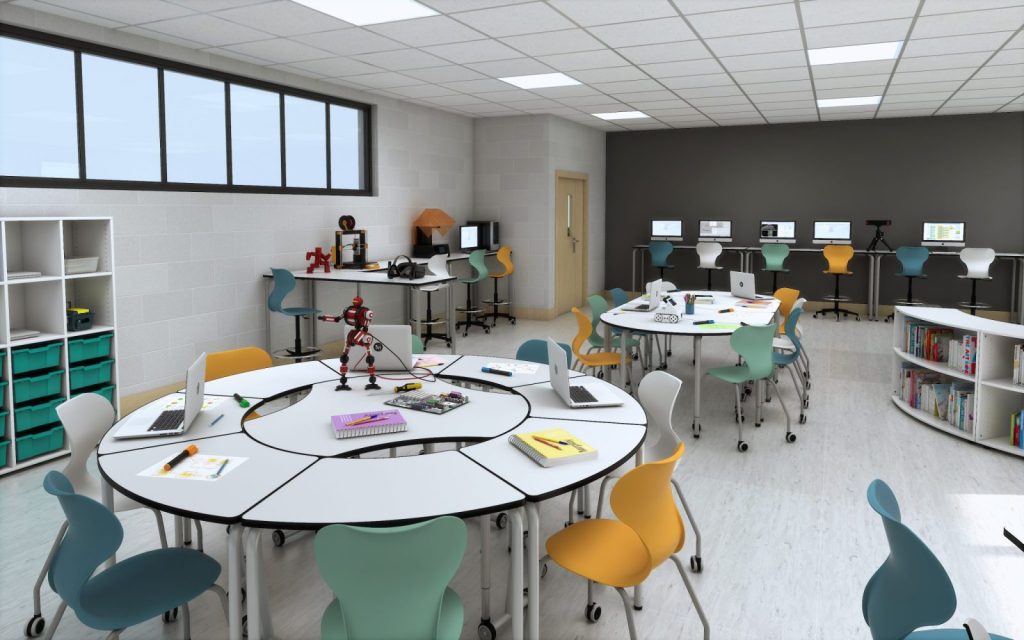
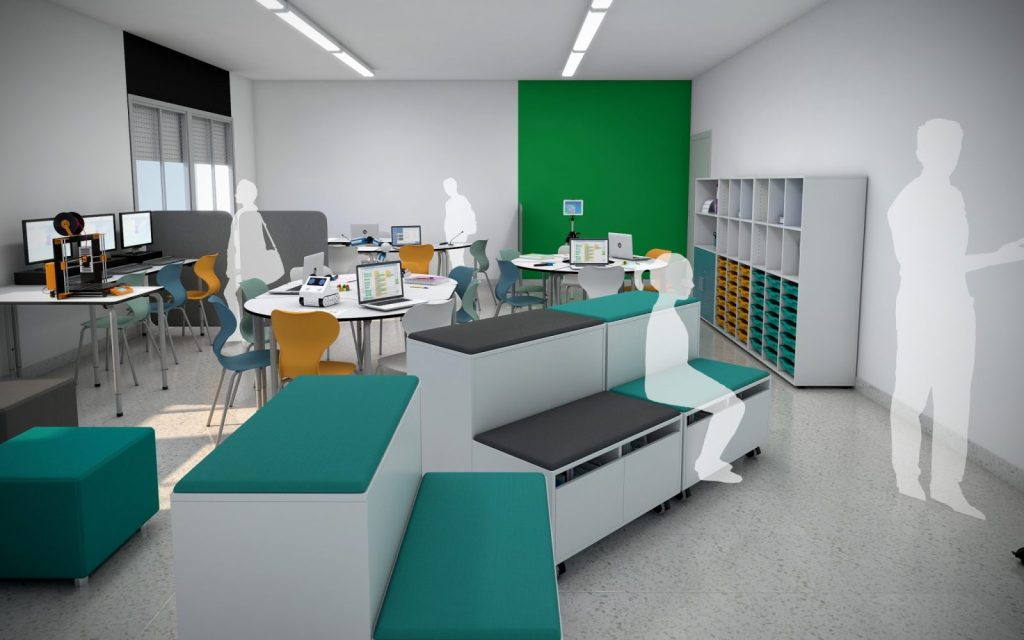
Each zone of the classroom of the future is strategically equipped to enhance the teaching and learning processes, adapting to the needs of the students and encouraging their protagonism in the classroom.
Characteristics of STEAM classroom furniture
The school furniture for the STEAM classroom should be adaptable and functional, encouraging mobility and flexibility to support new forms of active learning. Furniture should be easily reconfigurable to allow the space to adapt to group, collaborative or individual activities as needed.
Modular and mobile tables
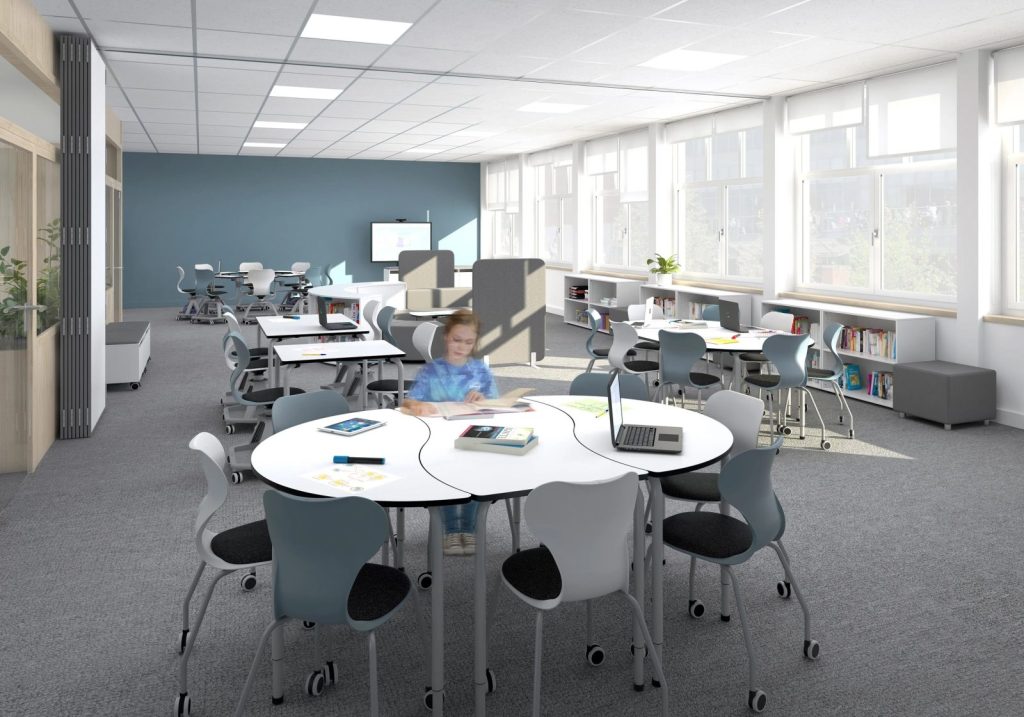
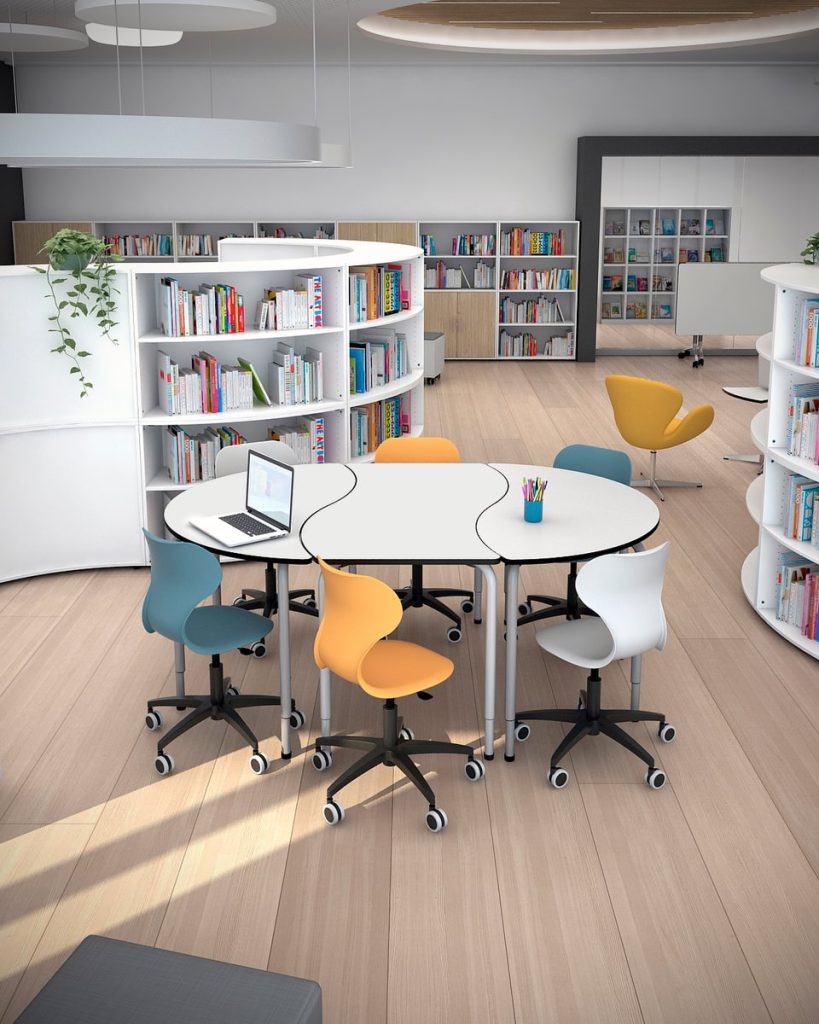
The tables should be light and easy to move to allow for quick reorganisation of the classroom. The Wave school table and the Yang school table can be fitted together and can be used in different combinations for individual or group work as required.
Adjustable and ergonomic chairs
Chairs should be suitable to accommodate the various ages of students. In addition, they should offer height adjustments to ensure a correct and comfortable posture during lessons. One example is the Mia Lift school chair model, which has swivel wheels for easy mobility in different spaces. It also has a curved backrest for greater comfort and a gas piston for height adjustment.
Multifunctional furniture
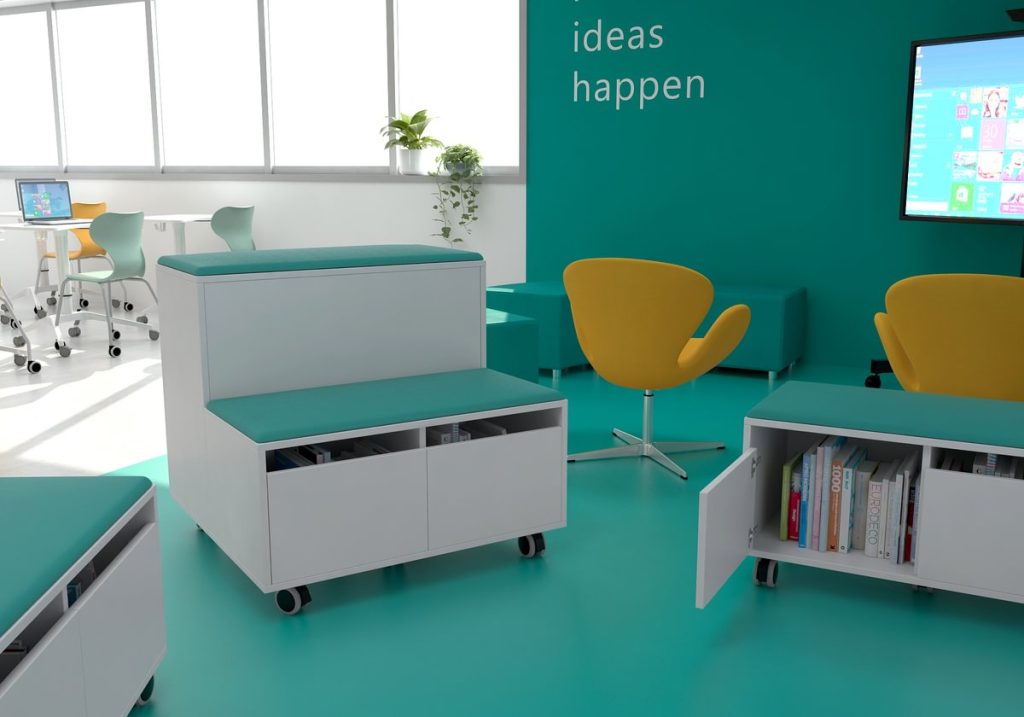
Mobile whiteboards, modular bleachers and surfaces that can be used both for writing and for projecting digital content are ideal for interaction and presentation space. The Move modular bleacher model, equipped with wheels and storage space, is ideal for creating different learning spaces and dividing areas.
The future of the classroom and the role of school furniture
The ideal school furniture for the STEAM classroom should be more than just functional because it should encourage collaborative learning and facilitate the use of technology among students. Modular furniture, adjustable chairs and mobile tables are examples of how school furniture design can be effectively adapted to new teaching methodologies.
At Mirplay School we design the right school furniture for the STEAM classroom, creating flexible and inclusive spaces that transform education and enable students to reach their full potential.

