
The infant stage is crucial for human development, as it lays the foundations for learning, socialisation and emotional development. In this context, the school environment plays a decisive role, and school furniture, often underestimated, is an essential tool to enhance these areas. An appropriate physical environment ensures children’s comfort and safety, and also directly influences their ability to concentrate, interact and learn.
School furniture designed for the infant stage must respond to the particular needs of this age group: facilitating exploration, encouraging autonomy and providing a safe and welcoming space where children can develop as a whole. Designing the right school furniture is an investment in the future of children’s education and well-being.
School furniture as a bridge to learning and development
School furniture not only fulfils a practical function, but also acts as a bridge between the child and his or her educational environment. Elements such as adjustable tables and chairs or structures that stimulate movement and exploration can be instrumental in the development of motor and cognitive skills.
• Modular chairs and tables to foster collaboration and autonomy
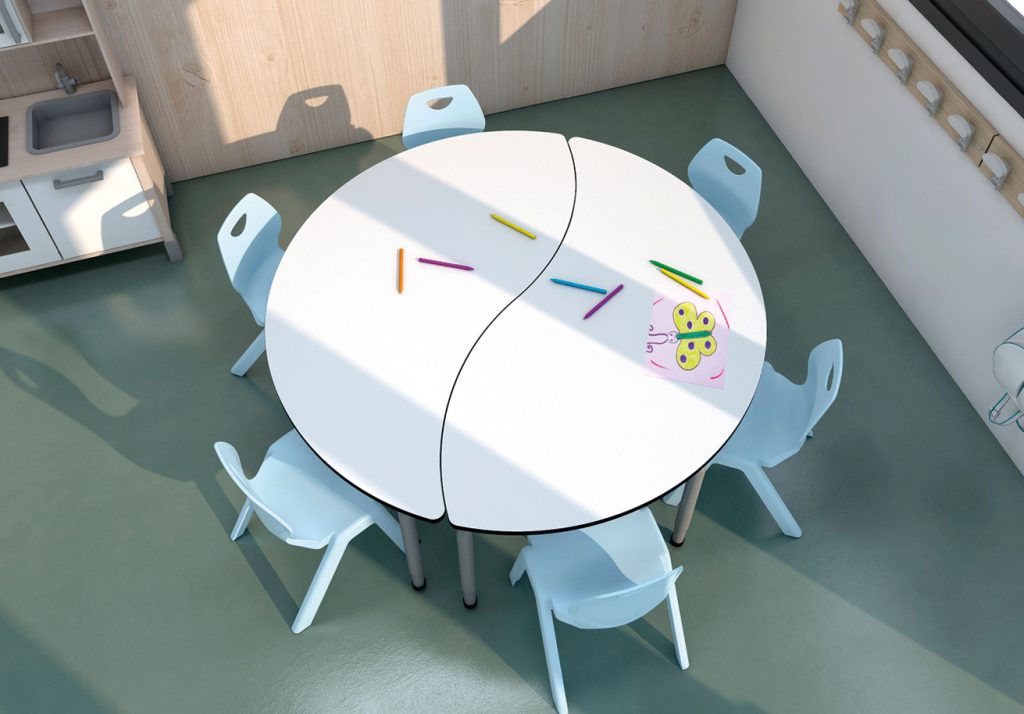
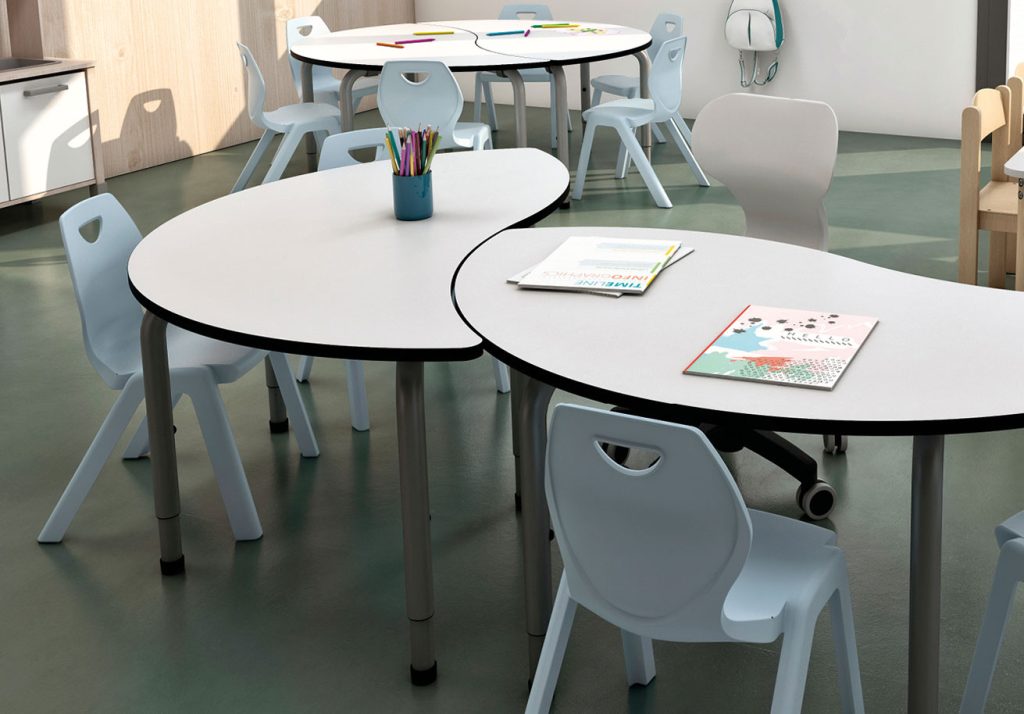
For example, modular tables that adapt to group or individual activities encourage collaboration and teamwork from an early age. Ergonomic and adjustable chairs promote autonomy, allowing children to experiment with different postures without compromising their comfort.
• Child-accessible storage spaces
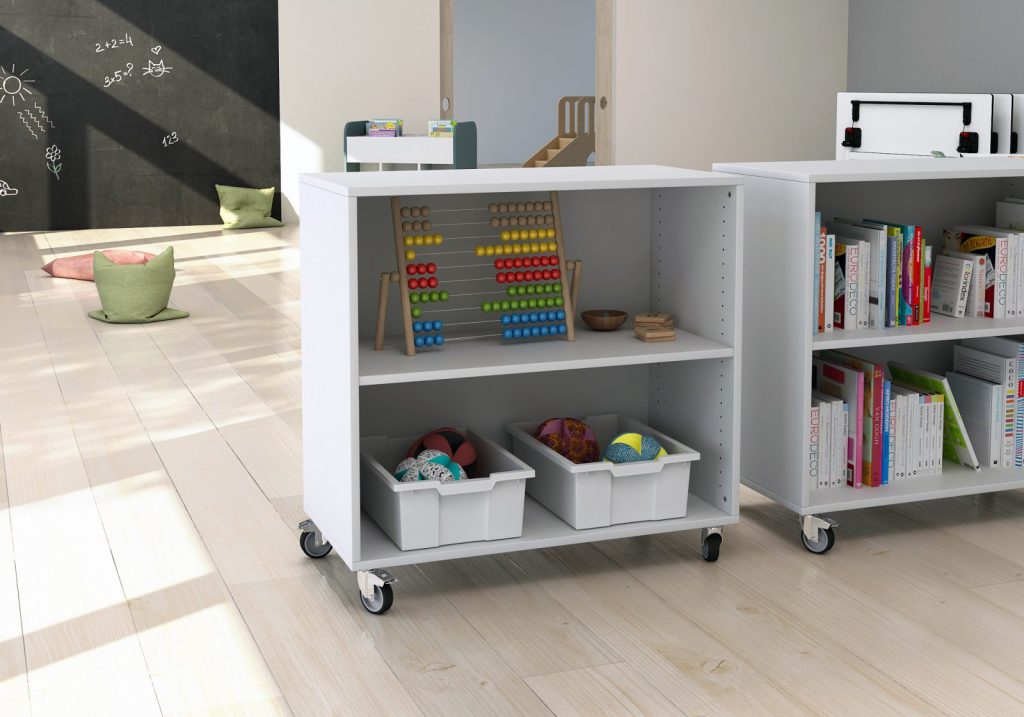
Another key example is storage spaces at their height, which encourage personal organisation and reinforce a sense of responsibility from an early age.
Ergonomics and safety: priorities in children’s school furniture design
Ensuring that school furniture is ergonomic and safe is essential for children’s physical well-being. Child ergonomics ensures that tables and chairs are adapted to the physical dimensions of children, allowing correct posture to avoid back problems or long-term discomfort. This not only protects their health, but also improves their ability to concentrate and learn.
Safety in school furniture: a risk-free environment
On the other hand, safety must be a priority in the design of any school furniture. The materials used must be non-toxic and comply with strict safety regulations. Rounded corners, stable and sturdy surfaces, and smooth finishes are details that make a difference in an environment where children are constantly on the move.
Safe furniture also allows children to explore freely without fear of frequent accidents, which contributes to a more relaxed environment conducive to learning.
Stimulus and creativity: school furniture as an educational tool
The design of school furniture can also be a powerful ally in stimulating creativity and active learning. Bright colours and attractive shapes not only make the classroom a more welcoming place, but also influence children’s mood and attention.
Impact of colours and shapes on learning
Studies have shown that colours such as yellow and green can improve concentration, while warm tones such as orange promote energy and creativity.
Flexible and adaptable classrooms to encourage interaction
The layout of the furniture also plays a crucial role. A flexible classroom, where tables and chairs can be reconfigured quickly, allows educators to adapt the space to different activities, such as workshops or group work. This versatility not only facilitates learning, but also fosters adaptability in children.
Playful elements for learning and creativity
Incorporating playful elements in the furniture, such as interactive surfaces or structures that invite play, turns the classroom into a space where learning and playing go hand in hand, stimulating children’s creativity and natural curiosity.
School furniture that transforms early childhood education
Well-designed school furniture is not only a functional tool, but an essential component in creating an inspiring and healthy learning environment. From ergonomics and safety to creative stimulation, every element of the furniture can have a significant impact on the holistic development of children during the early years.
At Mirplay School we believe that investing in quality school furniture is investing in the future of education. The school environment is much more than just a space: it is the first step towards meaningful learning and a fulfilling life.
Choosing the right school furniture during the infant stage can make all the difference to children’s development and well-being.

