
Knowing how to choose the best furniture for collaborative classrooms is essential to promoting a dynamic and effective learning environment. In flexible educational spaces, such as collaborative classrooms, furniture must not only be functional, but also contribute to interaction and creativity among students.
At Mirplay School, we believe that good classroom design can transform the way students engage with content, their peers and teachers. The right design facilitates more dynamic, participatory and active learning, where each student can engage more effectively and develop skills that go beyond academic knowledge, improving their ability to work together and solve problems as a team.
Benefits of collaborative classrooms and appropriate furniture
Collaborative classrooms are learning spaces designed to encourage interaction, teamwork, and the exchange of ideas among students. Unlike traditional teaching methods, collaborative classrooms seek to create a flexible and dynamic environment where students can actively participate in their learning process, using a variety of tools.
Collaborative classrooms offer numerous benefits for both students and teachers, including:
• Promotion of teamwork
Collaborative classrooms enable students to collaborate on projects, which improves their communication and cooperation skills.
• Development of cognitive and social skills
By working together, students develop critical thinking, problem-solving and empathy skills.
• Increased motivation and participation
The flexible design of the classrooms makes students feel more involved and motivated, which increases their participation.
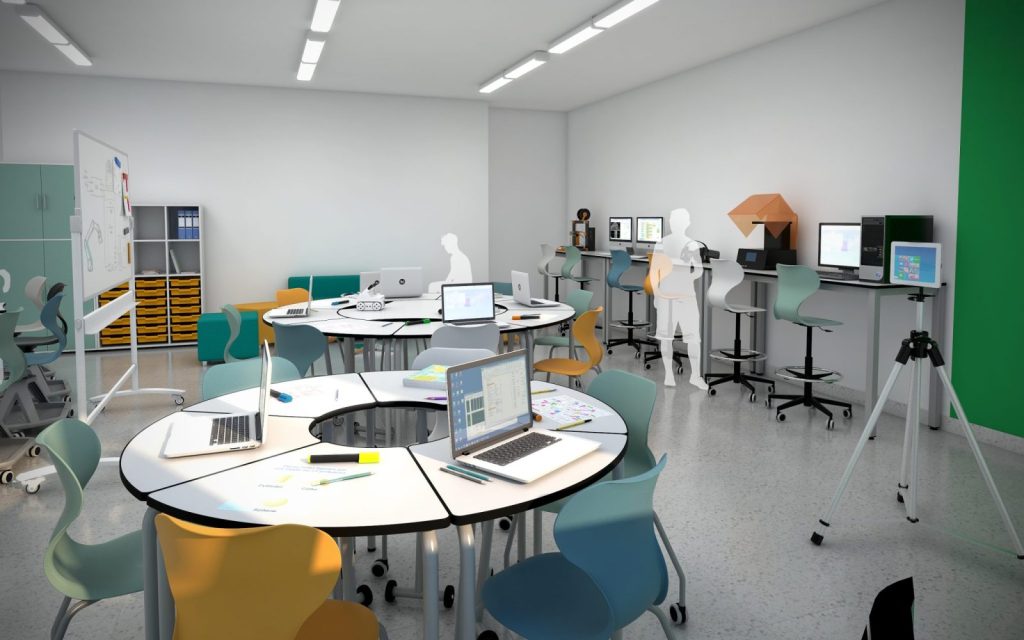
In order to achieve these benefits, it is crucial that the furniture is suitable. School furniture for collaborative classrooms must facilitate rapid reconfiguration of the space, allow for student mobility, and provide a comfortable environment that is conducive to both individual and group work. In addition, suitable furniture adapts to the different teaching methodologies being implemented in educational centres.
Key factors for choosing the right furniture
Recommended type of furniture for collaborative classrooms
To create an effective collaborative classroom, the furniture must be appropriate for the type of activities that will be carried out. Here are some types of furniture recommended for collaborative classrooms in educational centres:
Modular tables and mobile chairs
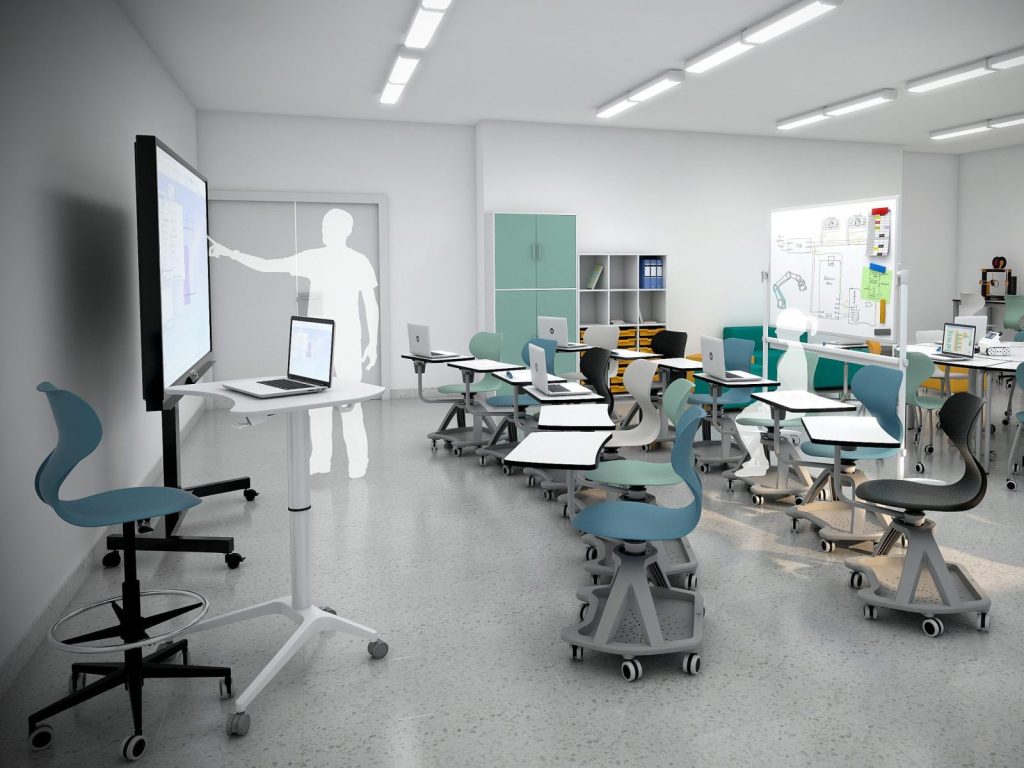
Modular tables are ideal for collaborative classrooms because they can be easily moved and rearranged to suit different configurations, such as group work, discussions or traditional lessons. Mobile chairs complement this furniture, allowing students to quickly change places and facilitating teamwork.
Shelving and storage solutions
In collaborative classrooms, storage should be accessible and flexible. Shelving and storage solutionsshould be easily accessible and allow students to quickly store and retrieve materials without interrupting the flow of activities. This helps keep the classroom tidy and organised.
Interactive whiteboards and technological tables
Technological furniture, such as interactive whiteboards and tables with integrated connectivity, can transform the classroom into a digital learning centre. This furniture allows technology to be seamlessly integrated into the teaching-learning process, fostering creativity and collaboration among students.
Optimise your collaborative classroom to increase educational performance
Choosing the ideal furniture for collaborative classrooms is a key decision in creating an efficient learning environment. A flexible, comfortable space adapted to students’ needs can increase productivity, improve interaction between classmates and teachers, and facilitate active and participatory learning.
Remember that furniture should not only be functional, but also aligned with the educational objectives and methodologies used in the classroom. Investing in the right school furniture is an investment in the future of students.

