
How to design cozy early childhood classrooms
How to design cozy early childhood classrooms
In early childhood education, the classroom space also teaches. The classroom is one of the first environments where children discover, explore, interact, and begin to build their own learning. Therefore, beyond being functional, it should also convey warmth, safety, and well-being.
Wooden school furniture is especially suitable for creating this type of environment. Its natural aesthetics, durability, and ability to create more welcoming spaces make it a great ally in early childhood classrooms. Combined with pieces adapted to young children’s needs, it allows for the design of balanced, stimulating environments designed for learning through play.
Versatile tables for different dynamics
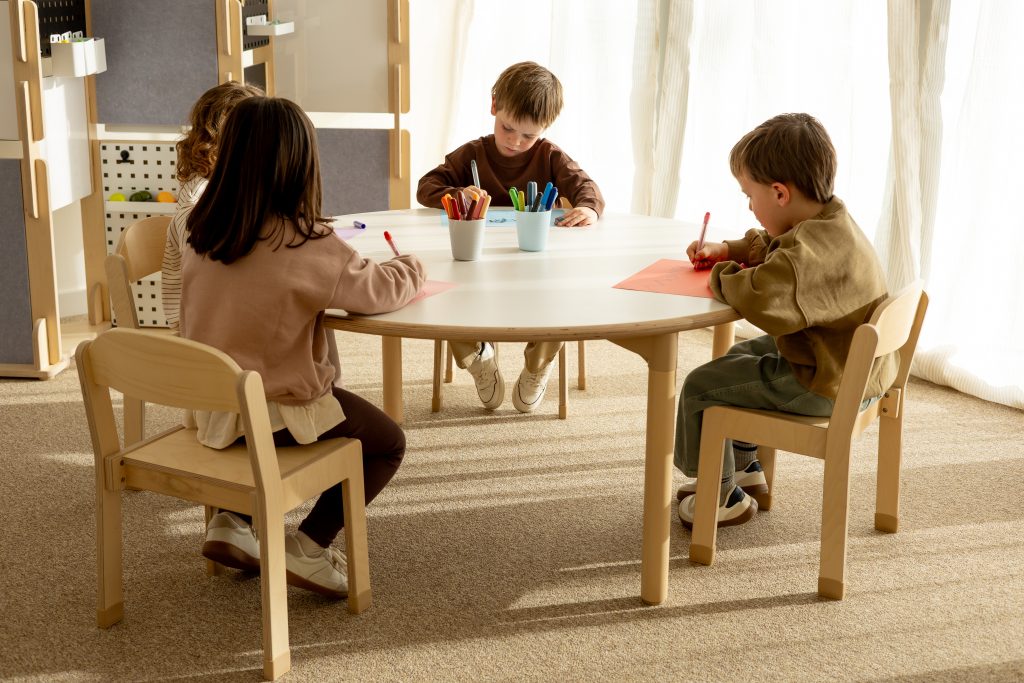
Children’s tables are one of the key elements of early childhood classroom furniture. Choosing wooden tables in different shapes—such as the YUCCA round table, the OLMO square table, or the ELDER rectangular table—makes it possible to adapt the classroom to different activities, methodologies, and learning moments.
Within the classroom, round tables encourage interaction and collaborative work, while square and rectangular tables help structure certain activities and create distinct learning areas. This versatility makes children’s school tables a functional solution for designing dynamic spaces that support both group activities and more individual work.


Ergonomic chairs that support growth
Comfort and ergonomics are essential at an early age, when children begin to develop postural habits. The ROMER wooden chair, available in different sizes, adapts to different ages and heights, promoting proper posture during daily activities.
Furniture designed for physical development improves comfort and also helps children relate better to their environment. At this stage, a good chair is not just practical, it is also a way of caring for young learners.


Calm corners for reading and well-being
Early childhood classrooms also need more relaxed spaces where children can slow down, read, rest, or engage in quiet activities. PALM floor cushions help create comfortable and cozy corners for calm and reading moments.
These spaces are important because they bring balance to the classroom. In contrast to more active areas, they provide a different atmosphere that supports emotional well-being and concentration. Creating such environments helps children experience different ways of being and learning within the same space.
Play and exploration as part of learning
Learning through play remains a cornerstone of early childhood education. That’s why furniture should also encourage exploration, curiosity, and participation. The ASPEN interactive module adds a playful dimension to the classroom with its modular structure and movable, combinable elements.
These types of solutions enrich the educational environment and promote more experiential learning. It’s not just about adding a play element, but about creating spaces that stimulate discovery and allow children to interact with their surroundings in a creative and participatory way.


Classrooms that care, inspire, and support growth
Designing a cozy early childhood classroom involves much more than arranging furniture. It means creating an environment where every element contributes to children’s well-being, safety, and learning experience.
Well-integrated tables, chairs, calm corners, and play elements help build warmer, more harmonious, and functional spaces. At Mirplay School, we design children’s furniture that supports this stage with a close, practical, and mindful approach, creating classrooms that inspire, care, and help children grow.

